
Co-design
Community work is shaped with people rather than delivered to them.
HAW connects research and practical tools with people, organisations and settings where health-information decisions happen in everyday life.
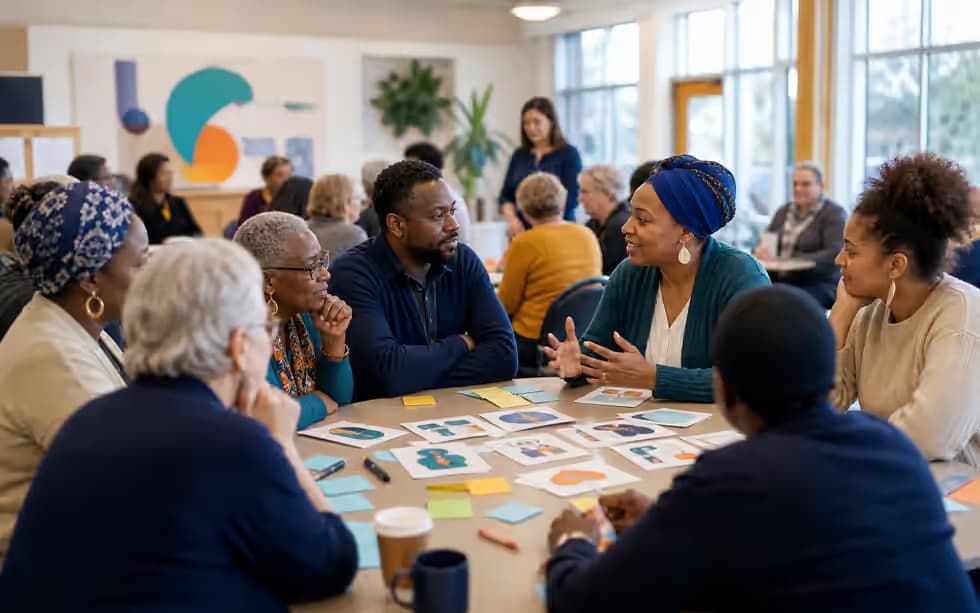
Community work is shaped with people rather than delivered to them.
Programmes recognise language, power, history, trust and lived experience.
Participation creates value for communities as well as evidence and learning.
Community work tests whether research, tools and learning make sense in real settings.
Activities include listening sessions, co-design workshops, partnerships, training, public information resources and evaluation.
Community activities use meaningful consent, accessible information, appropriate safeguarding and clear explanations of how insights are used.
When stories or lived experience are included, contributors are told whether their words remain private, are anonymised, summarised or published.
HAW works in the UK, across African countries and with African-diaspora communities while keeping each programme grounded in local context.
Programme information identifies partners, aims, evidence basis, ethics, outputs and impact measures.
Understanding how people judge and use health information.
Testing and refining practical resources with intended users.
Turning community insights into Academy modules and facilitator resources.
These sources make the evidence basis visible and help readers review the guidance, standards and research informing this page.
World Health Organization
Guides HAW's community-led approach to participation, trust, reciprocal benefit and context-sensitive design.
View sourceNHS England
Supports clear information and communication support needs, especially for disabled people and people with sensory loss.
View sourceWorld Health Organization
Frames health literacy as a personal and organisational capability shaped by social, economic and communication conditions.
View sourceW3C
Sets the accessibility benchmark used for HAW interface, content and interaction design.
View sourcePartnerships begin with shared purpose, transparency and a realistic scope of work.